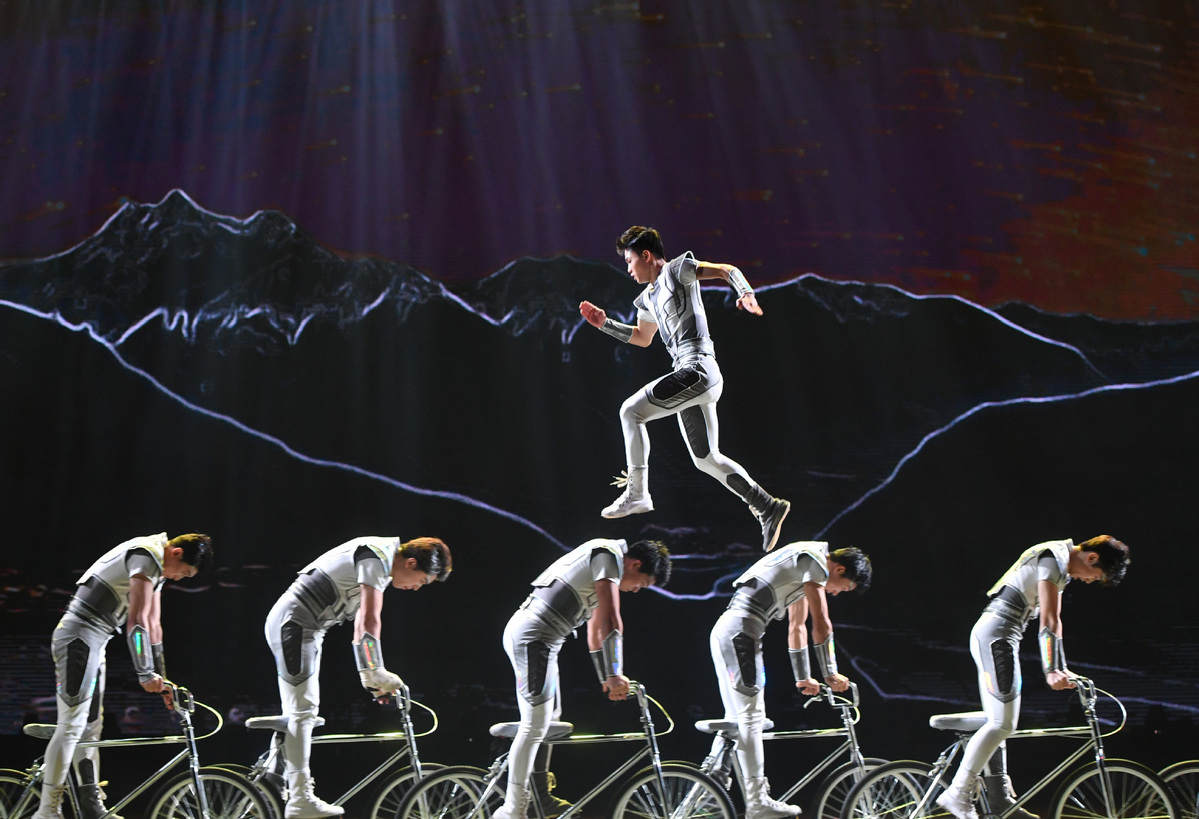
Chinese Acrobatics
Introduction
The Chinese acrobatics can be traced back to the Warring States Period (475-221 BC), making it one of the oldest performance arts in the world. Initially developed as a form of entertainment and livelihood, acrobatics grew from the resourcefulness of people in regions like Wuqiao, Hebei province. Impoverished farmland and seasonal off-farm work led locals to transform daily tools into props for performances, creating a unique art form that gained popularity along the Grand Canal of China.
Over centuries, Chinese acrobatics evolved into a sophisticated discipline, incorporating elements of martial arts, dance, and traditional music. By the 20th century, it had become a symbol of Chinese culture, recognized for its technical precision and artistic expression. In 2006, Wuqiao acrobatics was listed as a national intangible cultural heritage, highlighting its importance in China's cultural history.
Characteristics
Techniques and Skills
Chinese acrobatics is characterized by its extraordinary physical feats, requiring strength, flexibility, balance, and coordination. Performers undergo rigorous training to master techniques such as aerial silks, diabolo manipulation, hand juggling, contortion, hoop diving, and acrobatic strength routines. These acts often involve complex sequences and high levels of difficulty, showcasing the performers' dedication and skill.
Facial and eye expressions play a crucial role in acrobatic performances, adding emotional depth and enhancing the storytelling aspect. The art form emphasizes trust and collaboration, as many acts involve teamwork and precise synchronization between performers.
Props and Equipment
Props and equipment are integral to Chinese acrobatics, with performers using a wide range of items to create visually stunning acts. Traditional props include bowls, hats, hoops, and poles, while modern performances incorporate innovative apparatus like the Cyr wheel and aerial rigs. The use of props not only adds variety to the performances but also demonstrates the performers' ingenuity and adaptability.
International Influence
Chinese acrobatics has gained international acclaim, captivating audiences worldwide with its unique blend of tradition and innovation. Performances by Chinese acrobatic troupes have been showcased in prestigious events such as the Edinburgh Fringe Festival and the Monte-Carlo International Circus Festival. These global platforms have helped introduce Chinese acrobatics to new audiences, fostering cultural exchange and appreciation.
Collaborations with international circus organizations, such as UniverSoul Circus in the United States, have further expanded the reach of Chinese acrobatics. Through tours and joint performances, Chinese acrobats have demonstrated their technical excellence and artistic creativity, earning admiration and applause from global audiences.
Modern Development
The modern development of Chinese acrobatics has been marked by efforts to preserve its heritage while adapting to contemporary tastes. Innovative productions like Revolution Circus Show and Newbie have reimagined traditional acts in a contemporary context, blending rhythmic movement and theatrical performance to appeal to modern audiences.
Training programs and schools, such as the Hebei Wuqiao Acrobatic Art School, have played a pivotal role in nurturing talent and promoting the art form. These institutions offer rigorous training and cultural exchange opportunities, attracting students from around the world and ensuring the continued growth of Chinese acrobatics.
Notable Performances and Troupes
Chinese acrobatic troupes have delivered remarkable performances that showcase the art form's diversity and creativity. Notable acts include bowl balancing, lion dances, and aerial silks, performed by groups like the Sichuan Suining Acrobatic Troupe and the Oriental Acrobatics Center. Events like the China Wuqiao International Circus Festival have become renowned platforms for showcasing top-level acrobatic talent from around the world.
The festival, established in 1987, has grown into one of the world's best-known acrobatic events, attracting performers from countries such as Bulgaria, Canada, Mexico, and Tanzania. It serves as a testament to the global appeal and artistic excellence of Chinese acrobatics.
Training and Education
Training and education are fundamental to the development of Chinese acrobatics. Institutions like the Hebei Wuqiao Acrobatic Art School have been instrumental in cultivating skilled performers and promoting cultural exchange. Founded in 1985, the school has trained both Chinese and international students, becoming a global hub for acrobatic talent.
The school offers rigorous programs that emphasize physical training, technical precision, and artistic expression. Students from developing countries, such as Ethiopia, Tanzania, and Sierra Leone, have benefited from these programs, gaining valuable skills and contributing to the global spread of Chinese acrobatics.
Chinese acrobatics continues to thrive as a dynamic and evolving art form, bridging cultural divides and inspiring audiences with its timeless beauty and artistry.








